Reviewing the I Suck at Bowling SVG for Embroidery
As a designer who spends half my life digitizing and the other half stitching, I have learned that not every digital file translates beautifully to thread. We often browse marketplaces looking for quick wins for our craft business, grabbing files that look cute on a screen without considering how they will behave under the needle. Recently, I pulled the I Suck at Bowling Svg Png Cutting File from my library to test its viability for a client’s custom apparel order. What started as a simple check turned into a deeper evaluation of how this specific graphic holds up in real-world embroidery project scenarios.
First Impressions: Mood and Visual Personality
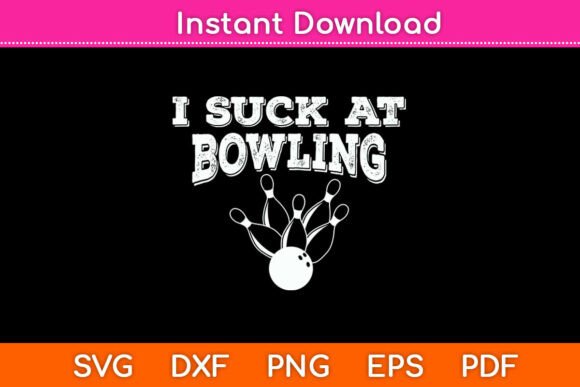
The first thing that strikes you about this design is its playful, self-deprecating humor. It captures a lighthearted mood that appeals to casual bowlers, league participants who enjoy a laugh, or anyone who prefers socializing over scoring strikes. Visually, the layout is straightforward. It relies heavily on typography and simple iconography, which is generally a good sign for embroidery. Complex gradients or photo-realistic details are nightmares to stitch, but this design’s clean lines suggest it was built with clarity in mind.
However, because this is marketed primarily as an Svg Png Cutting File for machines like Cricut Explore or Silhouette Cameo, we have to approach it with a designer’s eye. Vector paths for vinyl cutting do not always equate to optimal stitch paths. My initial assessment focused on the thickness of the lettering and the spacing between elements. If the text is too thin, it will vanish on textured fabrics. If the icons are too dense, they will create bulky, unattractive puckering. The visual personality is fun, but the technical execution requires careful planning before it becomes a finished product.
Real-World Application: From Screen to Sweatshirt
To test the practical value of this design, I imagined it applied to a heather gray sweatshirt. This is a classic use case for sweatshirt embroidery. The humorous quote fits perfectly on the back of a jacket for a bowling league team or on the front pocket area of a casual hoodie. In this context, the design acts as a conversation starter. For Etsy seller accounts or small shop owners, this type of niche humor sells well because it targets a specific hobby with a relatable twist.
I also considered its use on a canvas tote bag design. Here, the durability of the stitch matters. A tote bag gets tossed around, washed, and loaded with gear. If the stitch density is too low, the fabric might show through, making the design look cheap. If it is too high, the bag becomes stiff. Since this file originates as a graphic for cutting, converting it to a machine embroidery design means we must manually assign stitch types. I would recommend using a bold fill stitch for the main text to ensure visibility against the canvas weave, while using a satin stitch border to define the edges cleanly.
Another viable option is an embroidered patch. Patches are trending in the handmade product market. By stitching this design onto twill and then cutting it out, you create a versatile accessory that can be ironed onto jeans, backpacks, or hats. This extends the life of the design beyond a single garment, adding value for customers who want modular customization.
Technical Challenges and Fabric Considerations
While the concept is strong, the execution has pitfalls. The most significant challenge with any text-based digital embroidery file is legibility on difficult surfaces. If you plan to stitch this on a curved surface like a cap, you must be wary of distortion. The curvature of a baseball cap can warp straight lines, making the text look wavy. In such cases, using a sturdy stabilizer is non-negotiable. I always advise testing on scrap fabric first, especially when working with stretchy materials or thin knits.
Dark fabrics present another hurdle. If you are stitching this on a black polo shirt, your thread colors need high contrast. White or neon threads work best, but you must ensure the underlying fabric does not peek through the stitches. This is where checking the stitch density becomes critical. A light density might look elegant on paper but fail in practice. Conversely, overly dense stitching on a lightweight t-shirt can cause puckering, ruining the drape of the custom apparel.
Small details are another area of concern. If the design includes tiny elements, such as small bowling pins or intricate flourishes, these may not survive the stitching process. Needles can break fine threads, or the details may merge into a blob. I recommend simplifying any tiny components if you are digitizing this SVG yourself. For baby embroidery or delicate items, avoid this design unless you can significantly scale it up, as small hoops limit the maximum size you can achieve without re-hooping.
Enhancing Product Value and Brand Consistency
Using a pre-made graphic like the I Suck at Bowling Svg Png Cutting File can speed up your workflow, but it does not automatically guarantee a professional look. To maintain brand consistency, you must treat the file as a raw material, not a final product. Adjusting the font weight, tweaking the spacing, and selecting premium threads can elevate a basic graphic into a high-end personalized gift.
For commercial embroidery projects, customer trust hinges on quality. A sloppy stitch-out suggests carelessness, while a crisp, well-balanced design suggests professionalism. When you take the time to test the design on different fabric texture types, you demonstrate expertise. This attention to detail encourages repeat business and positive reviews. Whether you are creating holiday embroidery gifts or everyday wear, the perceived value increases when the design looks intentional rather than slapped on.
Practical Designer Notes for Best Results
Before you commit to stitching this design on a client’s garment, follow these practical steps to ensure success:
- Test on Scrap Fabric: Always run a test stitch on the same material you plan to use for the final item. This reveals issues with tension and density.
- Check Thread Contrast: View your design in black and white mockups to ensure the shapes are distinct without relying on color.
- Verify Licensing: Since this is a cutting file, confirm whether the creator allows commercial use for embroidered items. Many SVG licenses differ from embroidery file licenses.
- Digitize with Care: Do not simply auto-digitize the SVG. Manually set stitch angles to follow the shape of the letters and icons for a polished look.
- Use Proper Stabilizer: Match your stabilizer to your fabric. Cut-away stabilizer is best for stretchy knits, while tear-away works for stable woven fabrics.
- Inspect Small Details: Zoom in on the design. If any line is thinner than 1mm, consider thickening it to prevent breakage during stitching.
In conclusion, the I Suck at Bowling Svg Png Cutting File offers a fun, marketable concept for Crafts and Graphics enthusiasts. However, its success in embroidery depends entirely on how you adapt it. By understanding the limitations of vector graphics in a stitched medium and applying rigorous technical standards, you can transform a simple download into a standout piece of wearable art. Whether for a small shop product or a one-off printable mockup for your portfolio, treat the design with the respect it deserves, and it will reward you with engaged customers and quality results.